(732) 444-8822


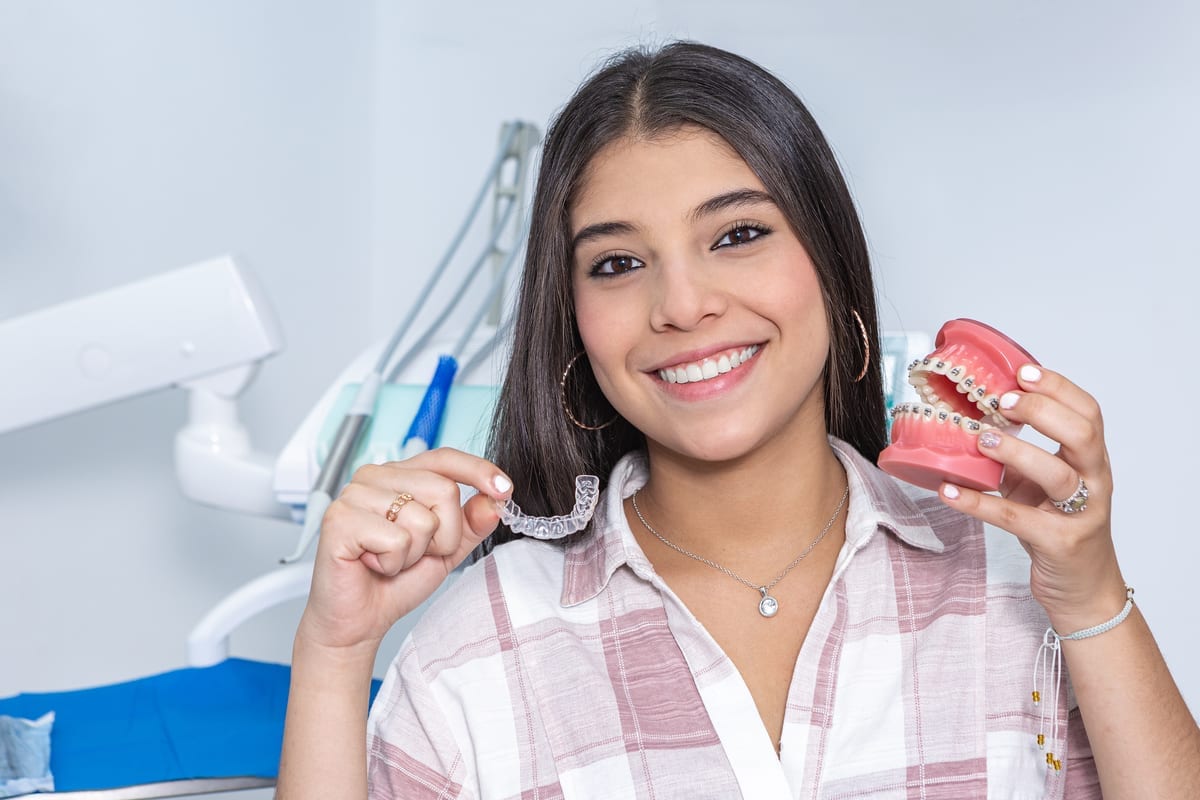
Many patients in Holmdel, NJ ask themselves: is your smile case too complex for Invisalign? It is a great question — and the answer depends on more than just how crooked your teeth look. Invisalign has come a long way, but it still has limits. Dr. Elona Kaso at Dimension Dental of Holmdel helps patients understand exactly where those limits are.
This article walks you through what Invisalign can treat, what it struggles with, and when a different approach may serve you better. Knowledge is the first step toward a confident smile decision.
What Invisalign Can Fix: Common Cases in Holmdel
Invisalign works by using a series of custom clear aligners. Each tray gradually shifts your teeth into a better position. The technology has improved dramatically over the past decade.
Here are the most common issues Invisalign handles well:
- Mild to moderate crowding — teeth that overlap or sit slightly out of alignment
- Spacing gaps — small to moderate gaps between teeth
- Mild overbite — where upper front teeth extend too far over lower teeth
- Mild underbite — where lower teeth sit slightly in front of upper teeth
- Crossbite — where some upper teeth sit inside lower teeth
- Open bite — where upper and lower teeth do not fully meet when biting
These cases make up a large portion of orthodontic concerns. If your smile issue falls in these categories, Invisalign could be a strong fit. A consultation with Dr. Kaso will confirm your specific situation.
Is Your Smile Case Too Complex for Invisalign? Holmdel Patients Should Know These Limits
Not every smile issue responds well to clear aligner therapy. Some cases require more force or control than aligners can provide. Understanding these limits protects you from unrealistic expectations.
Invisalign may struggle with the following:
- Severe crowding — teeth that are significantly rotated or severely overlapping
- Large overbite or underbite — issues rooted in jaw structure rather than tooth position
- Significant bite problems — complex misalignments affecting chewing and jaw function
- Missing teeth without a restoration plan — gaps can shift neighboring teeth during treatment
- Teeth with short crowns — aligners need enough tooth surface to grip properly
Jaw-related alignment issues are often the biggest barrier. When the problem comes from the jaw itself, orthodontic appliances or surgery may be part of the solution. Aligners move teeth — they do not reposition the jaw.
Dr. Kaso takes time to evaluate both tooth position and jaw structure. That full picture helps determine the most effective path forward for each patient.
How Crowding and Spacing Affect Your Candidacy
Crowding and spacing are the two most common reasons people seek orthodontic treatment. Both can range from minor to severe. Severity is the key factor in deciding whether Invisalign is the right tool.
Mild crowding — where teeth slightly overlap — responds very well to clear aligners. Moderate crowding can also be managed in many cases. Severe crowding, however, may require more precise control that traditional braces provide.
Spacing issues follow a similar pattern. Small gaps respond well to Invisalign. Very large gaps, especially across multiple teeth, may need a combined approach. Sometimes Cosmetic Dentistry solutions like bonding or veneers are used alongside or instead of aligners for spacing concerns.
Your dentist will measure the degree of crowding or spacing in millimeters. That measurement helps guide the treatment recommendation. Guessing without a clinical exam leads to poor outcomes.
When Traditional Braces or Other Treatments Work Better
Traditional braces use brackets and wires bonded directly to teeth. They apply continuous, precise pressure. This gives orthodontists more control over complex movements.
Cases where braces often outperform Invisalign include:
- Severely rotated teeth requiring more than 20 degrees of correction
- Vertical tooth movement that requires significant intrusion or extrusion
- Complex bite corrections involving multiple teeth and jaw alignment
- Younger patients who are still growing and need growth-guided treatment
In some cases, neither braces nor aligners alone address the core problem. Patients with jaw discrepancies may need orthognathic surgery combined with orthodontics. Dr. Kaso will refer you appropriately if your case requires a specialist.
It is also worth noting that certain restorative needs must be addressed before or during orthodontic treatment. If a tooth needs a crown or implant, that changes the treatment sequence. A full dental evaluation catches these factors early.
What Happens During Your Invisalign Consultation at Dimension Dental of Holmdel
The consultation is where the real answers begin. Dr. Kaso uses digital imaging and clinical exams to assess your smile comprehensively. You do not need to guess whether you qualify — the data tells the story.
Here is what you can expect during a typical Invisalign consultation:
- Digital X-rays and photos — these reveal bone structure and tooth positioning
- Bite assessment — Dr. Kaso checks how your upper and lower teeth meet
- Crowding and spacing measurement — precise millimeter-level analysis
- ClinCheck preview — a digital simulation showing projected tooth movement
- Treatment recommendation — Invisalign, braces, or a combined approach
If Invisalign is the right fit, you will leave with a clear plan. If another option works better for your case, Dr. Kaso will explain why. The goal is always the best long-term outcome for your health and your smile.
Some patients also benefit from addressing dental health issues before starting orthodontics. If you have a dental concern that needs urgent attention, Emergency Dentistry services at Dimension Dental are available to help stabilize your oral health first.
Frequently Asked Questions
Can Invisalign fix a severe overbite?
Invisalign can correct mild to moderate overbites in many patients. Severe overbites — especially those caused by jaw structure — may require traditional braces or a combination of orthodontic and dental treatments. Dr. Kaso will assess the root cause of your overbite during your consultation.
How do I know if my crowding is too severe for Invisalign?
Crowding severity is measured in millimeters. Mild to moderate crowding typically responds well to clear aligners. Severe crowding — where teeth are heavily rotated or significantly overlapping — may exceed what Invisalign can reliably correct. A clinical exam with digital imaging gives you a definitive answer.
Is Invisalign just for adults, or can teenagers use it too?
Invisalign offers a teen-specific version designed for younger patients with developing teeth. However, candidacy still depends on the complexity of the case. Teenagers with severe alignment or jaw issues may be better served by traditional braces. Dr. Kaso evaluates each young patient individually.
What if I start Invisalign and my case turns out to be more complex than expected?
Treatment plans can be adjusted if new challenges arise. In some cases, patients transition from Invisalign to braces or require additional refinement trays. Regular check-ins with Dr. Kaso throughout your treatment allow for timely adjustments. Open communication with your dentist is key to staying on track.
How long does Invisalign treatment typically take in Holmdel?
Treatment length depends on case complexity. Simple cases may take as few as six months. More involved cases can range from twelve to eighteen months or longer. Your ClinCheck digital plan will give you an estimated timeline based on your specific tooth movements.
At Dimension Dental of Holmdel, Dr. Elona Kaso is committed to helping you understand every option available for your smile. Whether Invisalign is right for you or another path fits better, you deserve clear answers backed by clinical expertise. Book Now to schedule your appointment with our team.